What It Actually Takes to Run a Sustainable Winery
Feature of 3100 Cellars in Eagle, Idaho
By Mya Parr, April 2026
Here in Boise, whether we take notice or not, we are surrounded by luxuries.
The luxury of access to nature, of local coffee shops and small businesses, the luxury of fertile land that supports the food we grow and consume: even the soil beneath our feet, as Idaho is home to some of the most fertile ground in the United States.
For 3100 Cellars, that environment became the foundation for creating something new: Idaho’s first and only sparkling winery.
The name itself reflects the deep connection to place. Idaho is home to over 3,100 miles of whitewater rivers. For co-owner Hailey and her husband, Marshall, a love for outdoors and Idaho’s river systems became something deeper than appreciation, but rather a responsibility. This sense of responsibility carries into how they run their business, guiding decisions with the intention of leaving the land better than they found it.
Defining, or Rather, Redefining Accountability
Building their winery, 3100 Cellars made the decision to pursue LIVE certification.
So, what’s a LIVE certification anyways?
A LIVE (Low Input Viticulture and Enology) certified winery is held to rigorous environmental and social standards, with a focus on biodiversity, soil health, reduced chemical inputs, and long-term ecosystem protection. Unlike many certifications, it is not a one-time process. It requires consistent compliance across multiple growing seasons, with ongoing audits and reporting.
“You can’t just decide you’re sustainable one year,” Hailey explained. “You have to show it—over time.”
That timeline proved to be real. Even after documenting past practices, prior non-compliance extended their certification process, ultimately requiring multiple years to achieve full approval.
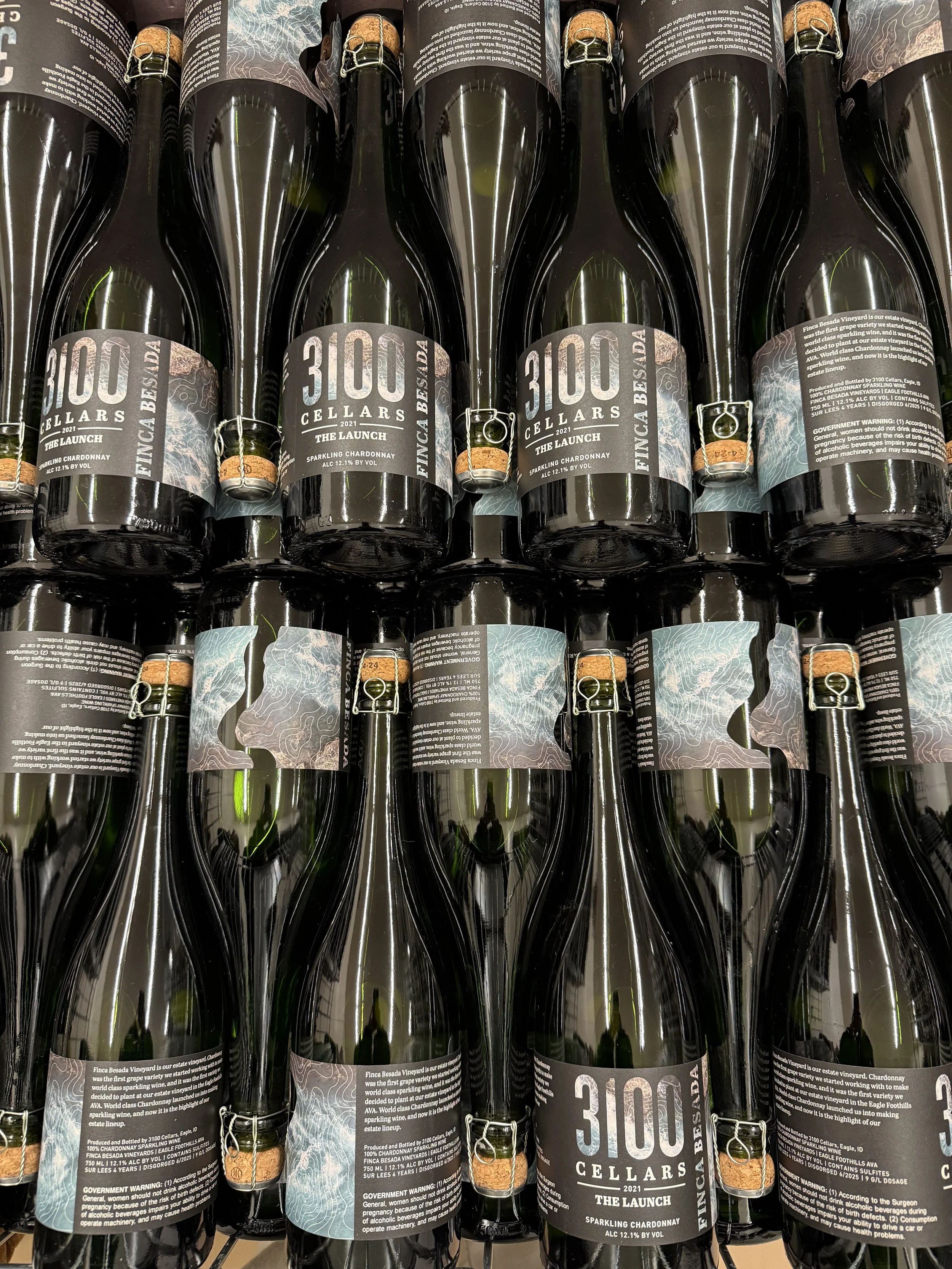
“There were a few reasons we chose LIVE certification,” Hailey said. “It gave us resources—especially for the vineyard. We’re not farmers by background, so when issues came up, it could feel overwhelming. You Google everything and still don’t know what the right answer is.”
For Hailey, the decision was also deeply tied to place. “Idaho has over 3,100 river miles—that’s where our name comes from—and we wanted to ensure our farming practices reflected a real commitment to protecting those rivers.”
While conversations around sustainable wine often focus on vineyards, some of the most impactful changes at 3100 Cellars have happened inside the winery itself.
Water use, particularly in cleaning processes, is one of the largest sources of environmental impact in wine production. New standards are pushing wineries to reduce the amount of water used per gallon of wine produced, forcing a closer look at everyday practices.
“On the winery side, water usage is the toughest,” Hailey noted. “A lot of people don’t think twice about hosing everything down, but small changes—like sweeping first or recirculating water—make a big difference.”
For 3100 Cellars, addressing this didn’t require entirely new systems. "We were already close,” she said. “I’d always thought we were using way too much water. It mostly required retraining myself and being more intentional.”
These changes are not immediately visible to customers, but they are significant. They highlight an important distinction: the most meaningful sustainability work often happens in places that are easy to overlook.
The Tasting Room Experiment
When thinking about sustainability in business, it’s easy to focus on large-scale systems. But some of the most disproportionate impact happens in everyday operations.
In Boise, businesses make up just 6% of trash accounts, yet they generate nearly 60% of the city’s waste. It’s a statistic that reframes responsibility, especially for the customer-facing spaces like tasting rooms.
The winery operates under a unique constraint: limits on the number of customers they can serve. While that restriction presents challenges from a business standpoint, it has also shaped how they approach sustainability in a more practical way.
“That limitation… it kind of sucks for business in some ways,” Hailey explained. “But it’s actually helped us grow really slowly and be like, okay, this is very doable.” Instead of scaling quickly and defaulting to convenience, the team built their systems intentionally from the start.
“If we need 30 of everything, that’s manageable,” she said. “We can make that investment and know we’ll get the return, because we’re not constantly buying plastic or paper over and over again. We just need a dishwasher and a clothes washer.”
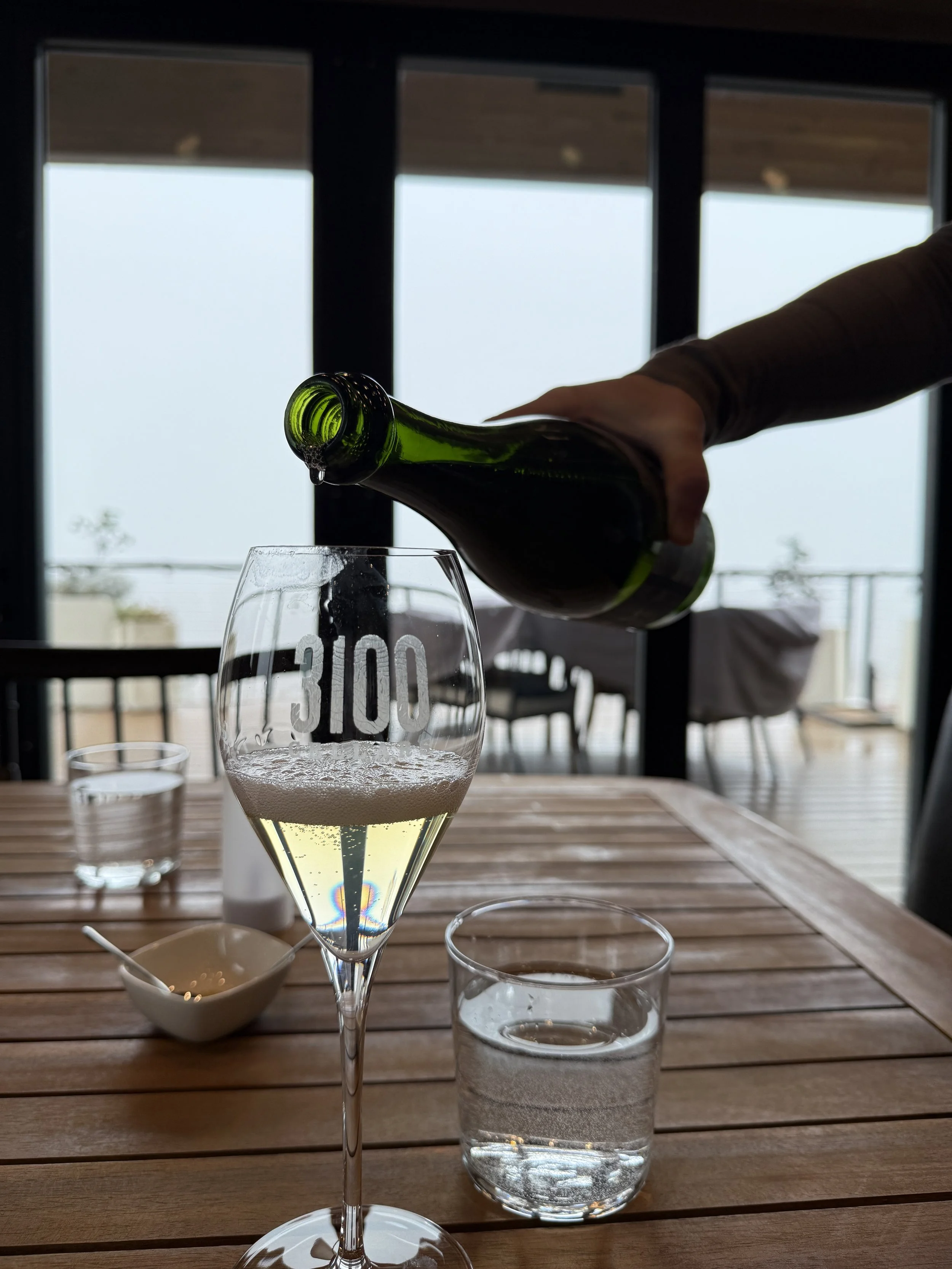
Rather than implementing a phased transition, they aligned their business practices with habits they already maintained at home, including reusing materials, washing instead of discarding, and minimizing unnecessary waste. Items that would typically be disposable (utensils, napkins, and service materials) were replaced with reusable alternatives supported by straightforward systems. It was anticipated that the transition to a zero-waste tasting room would take around a year, the project was complete in about a month.
At the same time, not every system is as easy to implement.
“Something we don’t do here that I want to be better about is compost,” Hailey said. “It’s been a tough nut to crack.”
Unlike recycling or waste reduction, composting requires consistent management and, in many cases, external infrastructure that isn’t always available.
“We don’t have anyone actively managing it,” she explained. “And out here, we don’t have compost services… just trash and recycling. So even if we had a bin, we’d still have to haul it somewhere.”, for now, some materials are taken offsite or handled in smaller ways, but it remains an area for growth as their operations expand.
This raises a broader question: how many sustainability challenges within businesses are truly structural, and how many are simply the result of unexamined defaults?
The Part No One Likes to Talk About
Sustainability conversations often center on environmental impact, but 3100 Cellar takes it to a broader discussion.
“We’ve been talking a lot about the three pieces of a sustainable business,” Hailey explained. “There’s the environmental side, but then there’s being a business that makes money, and then taking care of the people that are part of it.”
Running a winery comes with long timelines and financial pressure, making it impossible to ignore the economic side of sustainability. “We were almost solvent last year,” Hailey said. “And for a winery ten years in, that’s pretty good.”
Yet at the same time, their goals extend beyond profitability.
“We want to be sure to treat our staff well,” she said. “That doesn’t mean meeting the industry standard, it means exceeding it.”
This perspective reframes sustainability as something more holistic. It’s not just about reducing environmental impact, but about creating a business that can support both its people and its purpose over time.
Between a tasting room designed without single-use waste, a vineyard that prioritizes native biodiversity over monoculture, and a product that aims to add value to its surrounding ecosystem rather than simply more “things” to the world, 3100 Cellars challenges our definition of luxury, reminding us that sometimes, what’s got to give is us.
—
If you liked this or know some who likes local wines, please share this with them!